Category Archives: Holidays in Mexico

Valentine’s Day, Diá de San Valentin

February 14 – Valentine’s Day, Saint Valentine’s Day, Diá de San Valentin

table-setting-valentines-day-5326-2

Table setting of roses, candles,champagne and sweets in honor of Valentine’s Day.
Photo: BigStockPhoto.com | Yastremska,

Valentine’s Day is observed on February 14 each year. It is celebrated in many countries around the world, although it remains a working day in most of them.

Romance - red roses and a candle depicting a romantic setting. Photo: BigStockPhoto.com | kjpargeter

Romance – red roses and a candle depicting a romantic setting.  Photo: BigStockPhoto.com | kjpargeter

St. Valentine’s Day began as a liturgical celebration of one or more early Christian saints named Valentinus. The most popular martyrology associated with Saint Valentine was that he was imprisoned for performing weddings for soldiers who were forbidden to marry and for ministering to Christians, who were persecuted under the Roman Empire. During his imprisonment, he is said to have healed the daughter of his jailer, Asterius. Legend states that before his execution he wrote her a letter “from your Valentine” as a farewell.
https://en.wikipedia.org/wiki/Valentine%27s_Day

The Catholic Church recognizes at least three different saints named Valentine or Valentinus, all of whom were martyred. One legend contends that Valentine was a priest who served during the third century in Rome.
https://www.history.com/topics/valentines-day

It is a festival of romantic love and many people give cards, letters, flowers or presents to their spouse or partner. They may also arrange a romantic meal in a restaurant or night in a hotel. Common symbols of Valentine’s Day are hearts, red roses and Cupid.
https://www.timeanddate.com/holidays/us/valentine-day

Constitution Day Mexicio, Día de la Constitución

February 5 – Constitution Day – Día de la Constitución
Celebrates the Promulgation of the 1857 and 1917 Constitutions.
Observance: First Monday of February.

 formally the Political Constitution of the United Mexican States (Spanish: Constitución Política de los Estados Unidos Mexicanos)
The Constitution of Mexico, formally the Political Constitution of the United Mexican States (Spanish: Constitución Política de los Estados Unidos Mexicanos) is the current constitution of Mexico. It was drafted in Santiago de Querétaro, in the State of Querétaro, by a constitutional convention, during the Mexican Revolution. It was approved by the Constitutional Congress on February 5, 1917. It is the successor to the Constitution of 1857, and earlier Mexican constitutions.
Source: Wikipedia.org

Copy of the Original Cover of the Political Constitution of the United Mexican States 1917
wikipedia.org/wiki/Constitution_of_Mexico

mexico-constitucion-de-1917

Copy of the Original Cover of the Political Constitution of the United Mexican States of 1917 with photo of the political leader Venustiano Carranza.

Read more here:
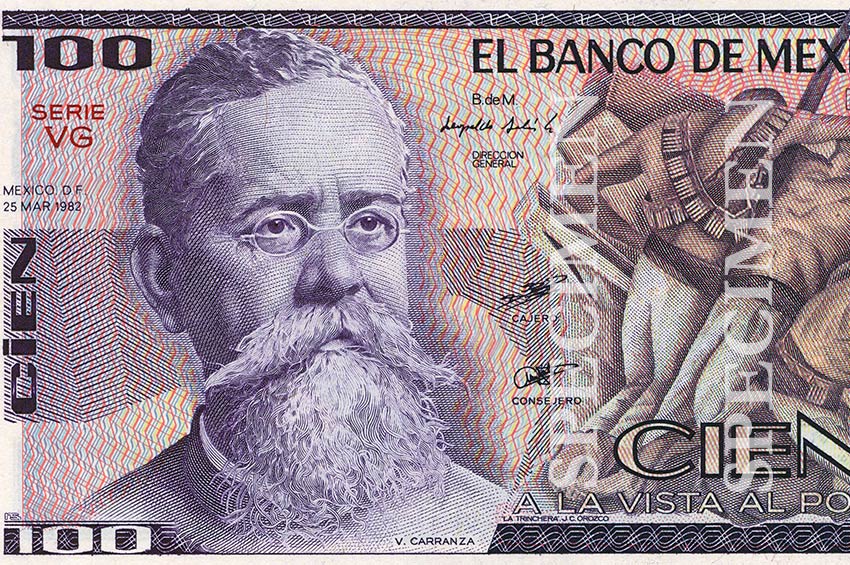
Venustiano Carranza Venustiano Carranza de la Garza (29 December 1859 – 21 May 1920)

v-carranza-cien-peso-mexico-4614-2

Image of political leader Venustiano Carranza on the 100 peso Mexican banknote.

Día de la Constitución, or Mexican Constitution Day, is celebrated on February 5th. The Mexican Constitution was drafted in Santiago de Querétaro by a Constitutional Convention during the Mexican Revolution. It was approved by the Mexican Constitutional Congress on February 5, 1917, with Venustiano Carranza serving as the first president under its terms. It is usually recognized with the festivals and street celebrations.
https://www.bajainsider.com/baja-life/holidays/constitutiondaymexico.htm

Statutory Holiday:
Holidays observed nationwide. Employees are entitled to a day off with regular pay and schools (public and private) are closed.

Día de la Candelaria, Day of the Candles or Candlemas

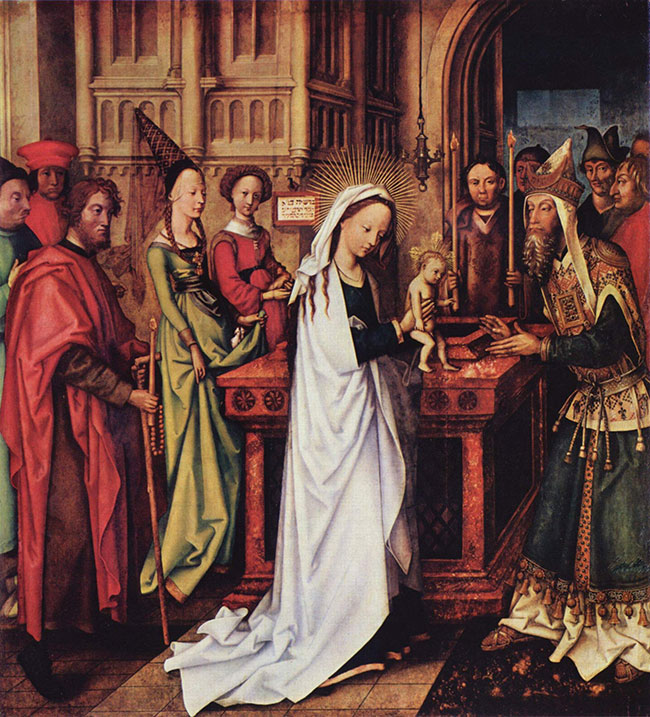
presentation-jesus-temple-Hans-Holbein

Presentation of Christ at the Temple
Artist: Holbein d. Ä., Hans; Date: 1500-1501; Medium: color on wood.
commons.wikimedia.org/wiki/

Día de la Candelaria or Day of the Candles or Candlemas happens on February 2, and is a Mexican celebration that is fusion of the Catholic influences and native Mexican tradition. Día de la Candelaria, like many other Mexican celebrations, represents a fusion of pre-Hispanic traditions and Catholic beliefs. Celebrated on February 2nd, it falls forty days after Christmas, and is celebrated by Catholics as the “Feast of Purification” or as the “Presentation of Christ at the Temple.”  According to Jewish law it was customary to bring a baby to the temple after that period of time had passed. So Jesus would have been taken to the temple on February second.
Source: https://www.bajainsider.com/baja-life/holidays/diadelacandelariamexico.htm

Candlemas – Día de la Candelaría
Nationwide, February 2nd
It’s Groundhog Day in the United States, but in Mexico, this is Día de la Candelaría, a religious holiday that marks the end of the Christmas season in the church calendar. On this day folks dress up images of the baby Jesus and take them to the church to be blessed.
https://gomexico.about.com/od/monthlyeventslist/a/february_events.htm

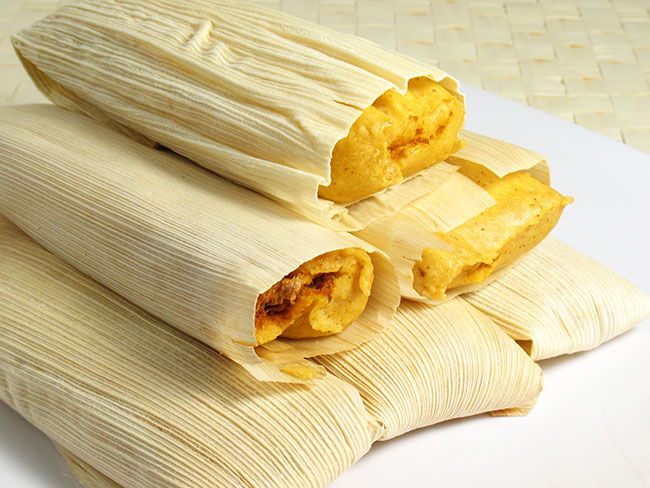
fresh-tamales-4024

Tamales are a popular traditional food in both Native American and Latin American cultures often eaten around Christmas. They are prepared with corn meal dough filled with spicy shredded meat wrapped in corn husks and then steamed.
Photo: BigStockPhoto.com / Andrea Skjold

Candlemas in Mexico:
Día de la Candelaria, or Candlemas, is celebrated throughout Mexico on February 2nd. It is mainly a religious and family celebration, but in some places, such as Tlacotalpan, Veracruz, it is a major fiesta with bullfights and parades. Throughout Mexico on this date people dress up figures of baby Jesus and take him to the church to be blessed, as well as getting together with family and friends to eat tamales.

Candlemas and Groundhog Day:
February 2nd marks the mid-way point between the winter solstice and spring equinox and has long been thought to be a marker or predictor of the weather to come, which is why it is also celebrated as Groundhog Day. In many places it is traditionally a time to prepare the earth for spring planting.

Presentation of Christ at the Temple:
February 2nd also falls forty days after Christmas, and is celebrated by Catholics as the feast of the purification of the virgin or as the presentation of the lord. According to Jewish law a woman was considered unclean for 40 days after giving birth so it was customary to bring a baby to the temple after that period of time had passed. So Jesus would have been taken to the temple on February second.

Fresco painting on the ceiling of a church showing the presentation of Jesus at the Temple.  Photo: BigStockPhoto.com / zatletic

Fresco painting on the ceiling of a church showing the presentation of Jesus at the Temple. Photo:BigStockPhoto.com / zatletic

Día de la Candelaria:
In Mexico this holiday is celebrated as Día de la Candelaria, known as Candlemas in English, because candles were brought to the church to be blessed.

In Mexico Día de la Candelaria is a prelude to the festivities of Kings Day on January 6th, when children receive gifts and families and friends break bread together, specifically Rosca de Reyes, a special sweet bread with figurines hidden inside. The person (or people) who received the figurines on Kings Day are supposed to host the party on Candlemas Day. Tamales are the food of choice.
Source: https://gomexico.about.com/od/festivalsholidays/p/dia_candelaria.htm

——–

DMTX. Mexico celebrates Candlemas Day, which marks the end of the Christmas period and coincides with the date that Jesus was presented in the temple of God in Jewish-Christian morals. Mexico City, Me

Mexico celebrates Candlemas Day, which marks the end of the Christmas period and coincides with the date that Jesus was presented in the temple of God in Jewish-Christian morals. Mexico City, Mexico. 02/02/2010.

Despite being a Christian festival, in Mexico is the result of a syncretic process in which convergence characteristics of the prehispanic cultures, colonial period and the Christian traditions of Europe and the Middle East.

In some parts of the country, this date marks the beginning of the year and that’s why indigenous groups “bless” the seeds that will be used during harvest time. They also “bless” candles, which according to Mexican traditions can ward off evils and diseases of people.

The traditional food of this celebration are the “tamales” and the “atole”, which should be offered to the guests for those people who found a plastic effigy with the figure of baby Jesus, in the Rosca de Reyes on January 6.
Source: https://www.demotix.com/news/238696/celebration-candlemas-day-mexico#media-238556

The Fiesta de la Candelaria is a festival in honor of the Virgin of Candelaria, patron saint of the city of Puno in Peru, held in the first fortnight of February each year. It is one of the largest festivals of culture, music and dancing in Peru. In terms of the number of events related to the cultures of the Quechua and Aymara peoples and of the mestizos of the Altiplano, and also in terms of the number of people directly and indirectly involved in its realization, it stands with the Carnival in Rio de Janeiro and the Carnaval de Oruro in Bolivia as one of the three largest festivals in South America.
Source: https://en.wikipedia.org/wiki/Fiesta_de_la_Candelaria

Feast Day of San Antonio de Abad, Saint Anthony Abbot

January 17 – Feast Day of San Antonio de Abad  (Saint Anthony Abbot)

The blessing of the animals is the most famous element of this day, which is the only day animals are allowed into Catholic churches.

Animals are adorned in ribbons and bows, and priests bless them.

feast-san-antonio-adad-333b5

Fotografía: Ángel Cantero. Bendición de animales el lunes 17 de enero de 2011, que tuvo lugar durante la mañana en la Plaza del El Salvador en Valladolid, con motivo de la celebración de San Antonio Abad. Iglesia en Valladolid Photo: www.flickr.com/commons/

January 17th is the Feast of San Antonio Abad, who is also known as San Antón in Spain. Although he was a hermit from Egypt, since Medieval times he has been the patron saint of domestic animals. To celebrate his feast, the night before and the day of the actual feast on January 17th, the Spanish build huge bonfires or hogueras in the streets, especially in Andalucia, Castilla-La Mancha, the Community of Valencia and Aragón. In Cataluna and the Balearic Islands, there are mounted processions in the streets. The townspeople gather around the bonfires, visit, eat, dance and drink.
https://spanishfood.about.com/b/2008/01/12/feast-of-san-antonio-abad.htm

feast-san-antonio-adad-9fda8

San Antonio Abad, Fotografía: Ángel Cantero. Bendición de animales en la Iglesia del Santísimo el Salvador el 17 de enero de 2011. Iglesia en Valladolid | www.flickr.com/commons/

This religious holiday is marked by the blessing of animals, which are allowed to enter Catholic churches for the day. An interesting view into Mexico’s dedication to religion, the day is marked by townspeople and farmers bringing pets and livestock to receive their blessings. Following animal-friendly church services, congregations and visitors enjoy a feast to celebrate. The event, which also showcases a number of spectacular local Catholic churches, is free.
More info here:
https://eventseeker.com/event/jan-17-2014/20127-feast-day-of-san-antonio-de-abad-monterrey

———-

If you like animals, there is no entertainment quite like seeing hundreds of pets, dogs, cats, horses, and even iguanas, snakes, and roosters, all converging in one square to be sprinkled with holy water!  January 17th,  is yet another important Saint’s Day in Spain, that of San Antonio Abad, patron saint of animals.

Naturally there’s an important backstory to Antonio Abad, also known as Anthony the Great. He was a Catholic (Coptic) monk born in 3rd-century AD Egypt who was known for spreading monasticism, but is now most famous for being the first to practice the asceticism of going into the wilderness to renew one’s faith through nature. This is how he became associated with animals. (Odd side note: He is also the Saint to whom you appeal to get rid of skin diseases, i.e. “St. Anthony’s fire”!)

On a day that celebrates animals in Spain, the horse is the central protagonist.  For the week or so leading up to his saint’s day, roughly January 11th through 17th, there are numerous equestrian exhibitions and “cabalgatas”, or cavalcades of horses passing through the streets all over Spain (especially in coastal towns and cities and on the islands).
See more at: https://www.thespainscoop.com/fiestas-de-san-antonio-abad-pets-have-festival/

st-anthony-abott
St. Anthony the Abbot is most well known as the Patriarch of Monks; the father of western monasticism. He is also the patron saint of grave-diggers and the protector of domestic animals such as cattle and other livestock. He is especially invoked by the people of Villavallelonga for the protection against the disaster from fire.
https://www.villavallelonga.com/patronsaints/santonio.html

Change of Federal Government in México

December 1 every six years.
Transmisión del Poder Ejecutivo Federal – Change of Federal Government in México.

A new Mexican president is sworn in every six years on December 1.
Next observance: December 1, 2018.

Enrique Peña Nieto – 2013-2018
The Presidency of the Republic of México.

Official photograph of the President of México, Mr Enrique Peña Nieto. 2013-2018 The Presidency of the Republic.  Español: Fotografía oficial del señor Presidente de México Enrique Peña Nieto. Presidencia de la República 2013-2018. Date 21 May 2013, 19:21:39 / Source Own work | Author PresidenciaMX 2012-2018 / https://en.wikipedia.org/

Official photograph of the President of México, Mr Enrique Peña Nieto. 2013-2018 The Presidency of the Republic. Español: Fotografía oficial del señor Presidente de México Enrique Peña Nieto. Presidencia de la República 2013-2018. Date 21 May 2013, 19:21:39 / Source Own work | Author PresidenciaMX 2012-2018 / https://en.wikipedia.org/

Ceremonia de transmisión del Poder Ejecutivo Federal de los Estados Unidos Mexicanos, December 01, 2012.