Valentine’s Day, Diá de San Valentin

February 14 – Valentine’s Day, Saint Valentine’s Day, Diá de San Valentin

table-setting-valentines-day-5326-2

Table setting of roses, candles,champagne and sweets in honor of Valentine’s Day.
Photo: BigStockPhoto.com | Yastremska,

Valentine’s Day is observed on February 14 each year. It is celebrated in many countries around the world, although it remains a working day in most of them.

Romance - red roses and a candle depicting a romantic setting. Photo: BigStockPhoto.com | kjpargeter

Romance – red roses and a candle depicting a romantic setting.  Photo: BigStockPhoto.com | kjpargeter

St. Valentine’s Day began as a liturgical celebration of one or more early Christian saints named Valentinus. The most popular martyrology associated with Saint Valentine was that he was imprisoned for performing weddings for soldiers who were forbidden to marry and for ministering to Christians, who were persecuted under the Roman Empire. During his imprisonment, he is said to have healed the daughter of his jailer, Asterius. Legend states that before his execution he wrote her a letter “from your Valentine” as a farewell.
https://en.wikipedia.org/wiki/Valentine%27s_Day

The Catholic Church recognizes at least three different saints named Valentine or Valentinus, all of whom were martyred. One legend contends that Valentine was a priest who served during the third century in Rome.
https://www.history.com/topics/valentines-day

It is a festival of romantic love and many people give cards, letters, flowers or presents to their spouse or partner. They may also arrange a romantic meal in a restaurant or night in a hotel. Common symbols of Valentine’s Day are hearts, red roses and Cupid.
https://www.timeanddate.com/holidays/us/valentine-day

Constitution Day Mexicio, Día de la Constitución

February 5 – Constitution Day – Día de la Constitución
Celebrates the Promulgation of the 1857 and 1917 Constitutions.
Observance: First Monday of February.

 formally the Political Constitution of the United Mexican States (Spanish: Constitución Política de los Estados Unidos Mexicanos)
The Constitution of Mexico, formally the Political Constitution of the United Mexican States (Spanish: Constitución Política de los Estados Unidos Mexicanos) is the current constitution of Mexico. It was drafted in Santiago de Querétaro, in the State of Querétaro, by a constitutional convention, during the Mexican Revolution. It was approved by the Constitutional Congress on February 5, 1917. It is the successor to the Constitution of 1857, and earlier Mexican constitutions.
Source: Wikipedia.org

Copy of the Original Cover of the Political Constitution of the United Mexican States 1917
wikipedia.org/wiki/Constitution_of_Mexico

mexico-constitucion-de-1917

Copy of the Original Cover of the Political Constitution of the United Mexican States of 1917 with photo of the political leader Venustiano Carranza.

Read more here:
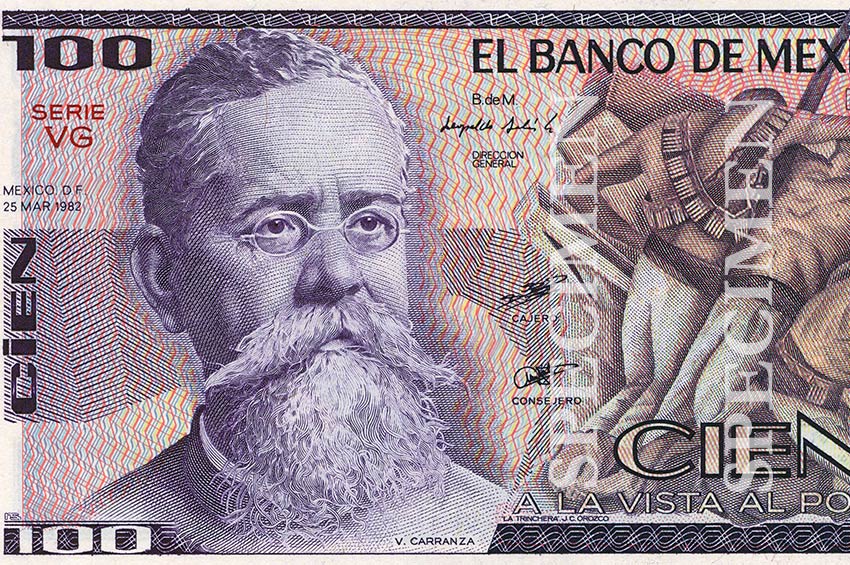
Venustiano Carranza Venustiano Carranza de la Garza (29 December 1859 – 21 May 1920)

v-carranza-cien-peso-mexico-4614-2

Image of political leader Venustiano Carranza on the 100 peso Mexican banknote.

Día de la Constitución, or Mexican Constitution Day, is celebrated on February 5th. The Mexican Constitution was drafted in Santiago de Querétaro by a Constitutional Convention during the Mexican Revolution. It was approved by the Mexican Constitutional Congress on February 5, 1917, with Venustiano Carranza serving as the first president under its terms. It is usually recognized with the festivals and street celebrations.
https://www.bajainsider.com/baja-life/holidays/constitutiondaymexico.htm

Statutory Holiday:
Holidays observed nationwide. Employees are entitled to a day off with regular pay and schools (public and private) are closed.

Día de la Candelaria, Day of the Candles or Candlemas

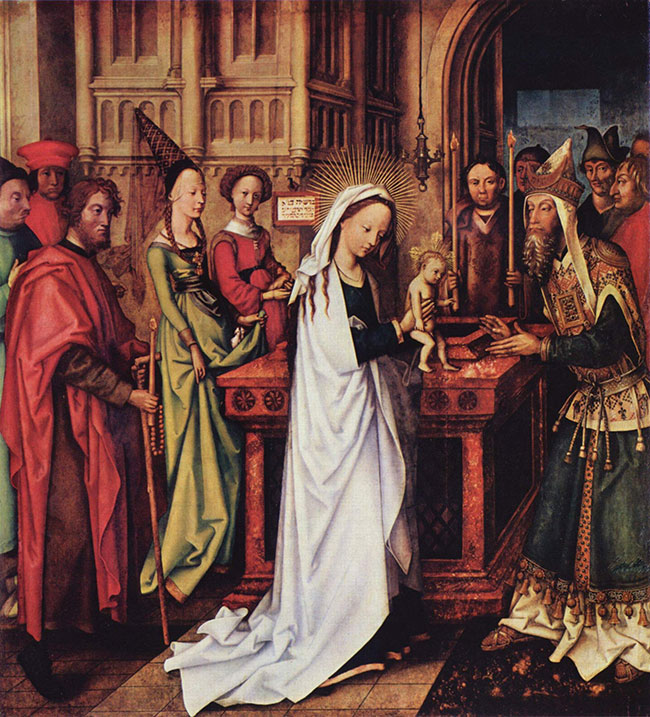
presentation-jesus-temple-Hans-Holbein

Presentation of Christ at the Temple
Artist: Holbein d. Ä., Hans; Date: 1500-1501; Medium: color on wood.
commons.wikimedia.org/wiki/

Día de la Candelaria or Day of the Candles or Candlemas happens on February 2, and is a Mexican celebration that is fusion of the Catholic influences and native Mexican tradition. Día de la Candelaria, like many other Mexican celebrations, represents a fusion of pre-Hispanic traditions and Catholic beliefs. Celebrated on February 2nd, it falls forty days after Christmas, and is celebrated by Catholics as the “Feast of Purification” or as the “Presentation of Christ at the Temple.”  According to Jewish law it was customary to bring a baby to the temple after that period of time had passed. So Jesus would have been taken to the temple on February second.
Source: https://www.bajainsider.com/baja-life/holidays/diadelacandelariamexico.htm

Candlemas – Día de la Candelaría
Nationwide, February 2nd
It’s Groundhog Day in the United States, but in Mexico, this is Día de la Candelaría, a religious holiday that marks the end of the Christmas season in the church calendar. On this day folks dress up images of the baby Jesus and take them to the church to be blessed.
https://gomexico.about.com/od/monthlyeventslist/a/february_events.htm

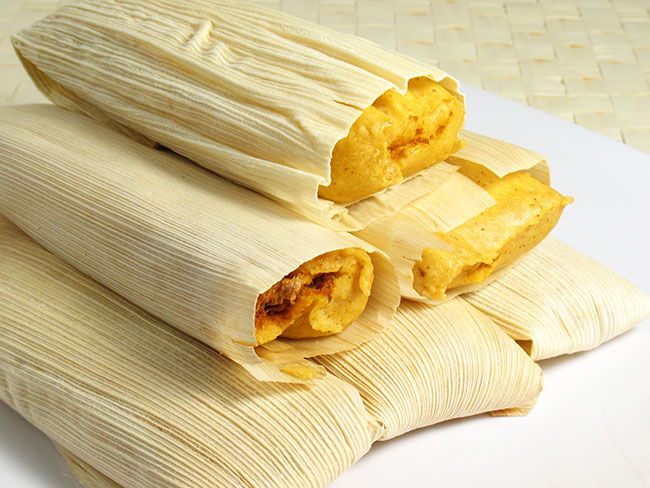
fresh-tamales-4024

Tamales are a popular traditional food in both Native American and Latin American cultures often eaten around Christmas. They are prepared with corn meal dough filled with spicy shredded meat wrapped in corn husks and then steamed.
Photo: BigStockPhoto.com / Andrea Skjold

Candlemas in Mexico:
Día de la Candelaria, or Candlemas, is celebrated throughout Mexico on February 2nd. It is mainly a religious and family celebration, but in some places, such as Tlacotalpan, Veracruz, it is a major fiesta with bullfights and parades. Throughout Mexico on this date people dress up figures of baby Jesus and take him to the church to be blessed, as well as getting together with family and friends to eat tamales.

Candlemas and Groundhog Day:
February 2nd marks the mid-way point between the winter solstice and spring equinox and has long been thought to be a marker or predictor of the weather to come, which is why it is also celebrated as Groundhog Day. In many places it is traditionally a time to prepare the earth for spring planting.

Presentation of Christ at the Temple:
February 2nd also falls forty days after Christmas, and is celebrated by Catholics as the feast of the purification of the virgin or as the presentation of the lord. According to Jewish law a woman was considered unclean for 40 days after giving birth so it was customary to bring a baby to the temple after that period of time had passed. So Jesus would have been taken to the temple on February second.

Fresco painting on the ceiling of a church showing the presentation of Jesus at the Temple.  Photo: BigStockPhoto.com / zatletic

Fresco painting on the ceiling of a church showing the presentation of Jesus at the Temple. Photo:BigStockPhoto.com / zatletic

Día de la Candelaria:
In Mexico this holiday is celebrated as Día de la Candelaria, known as Candlemas in English, because candles were brought to the church to be blessed.

In Mexico Día de la Candelaria is a prelude to the festivities of Kings Day on January 6th, when children receive gifts and families and friends break bread together, specifically Rosca de Reyes, a special sweet bread with figurines hidden inside. The person (or people) who received the figurines on Kings Day are supposed to host the party on Candlemas Day. Tamales are the food of choice.
Source: https://gomexico.about.com/od/festivalsholidays/p/dia_candelaria.htm

——–

DMTX. Mexico celebrates Candlemas Day, which marks the end of the Christmas period and coincides with the date that Jesus was presented in the temple of God in Jewish-Christian morals. Mexico City, Me

Mexico celebrates Candlemas Day, which marks the end of the Christmas period and coincides with the date that Jesus was presented in the temple of God in Jewish-Christian morals. Mexico City, Mexico. 02/02/2010.

Despite being a Christian festival, in Mexico is the result of a syncretic process in which convergence characteristics of the prehispanic cultures, colonial period and the Christian traditions of Europe and the Middle East.

In some parts of the country, this date marks the beginning of the year and that’s why indigenous groups “bless” the seeds that will be used during harvest time. They also “bless” candles, which according to Mexican traditions can ward off evils and diseases of people.

The traditional food of this celebration are the “tamales” and the “atole”, which should be offered to the guests for those people who found a plastic effigy with the figure of baby Jesus, in the Rosca de Reyes on January 6.
Source: https://www.demotix.com/news/238696/celebration-candlemas-day-mexico#media-238556

The Fiesta de la Candelaria is a festival in honor of the Virgin of Candelaria, patron saint of the city of Puno in Peru, held in the first fortnight of February each year. It is one of the largest festivals of culture, music and dancing in Peru. In terms of the number of events related to the cultures of the Quechua and Aymara peoples and of the mestizos of the Altiplano, and also in terms of the number of people directly and indirectly involved in its realization, it stands with the Carnival in Rio de Janeiro and the Carnaval de Oruro in Bolivia as one of the three largest festivals in South America.
Source: https://en.wikipedia.org/wiki/Fiesta_de_la_Candelaria

Ignacio Zaragoza Seguín

Ignacio Zaragoza Seguín, (March 24, 1829 – September 8, 1862) was a general in the Mexican army, best known for defeating invading French forces at the Battle of Puebla on May 5, 1862 (now celebrated in both the United States and Mexico as the Cinco de Mayo).
Zaragoza was born in the early Mexican Texas village of Bahía del Espíritu Santo (now Goliad, Texas, in the United States) in what was then the Mexican state of Coahuila y Texas.
https://en.wikipedia.org/wiki/Ignacio_Zaragoza

When “Cinco de Mayo” is mentioned in Mexico, one of the most symbolic battles in the Mexican collective unconscious immediately comes to mind: the Battle of Puebla.  General Ignacio Zaragoza, with only a small army, took on the powerful French forces of Napoleon III during the Second French Intervention.

Ignacio Zaragoza Seguin was born on March 24, 1829 in the city of Presidio de La Bahia de Espiritu Santo, now Goliad, in southern Texas, USA. He was the second son of the marriage between Miguel Zaragoza and Maria de Jesus Valdez  Martinez Seguin.

When he was five years old, after the independence of Texas, his family moved to  Matamoros in Tamaulipas state, where he began his studies and ten years later he moved to Monterrey, Nuevo Leon.

For several years he leaned toward the priesthood, but then left, perhaps to continue the example of his father, who was an infantryman.

During the United States intervention in Mexico between 1846 and 1848,young  Zaragoza tried to enlist as a cadet, but was rejected.

He saw, however, from a distance, how Mexico lost more than half of its territory in an unequal war.  It was not until 1853 that he managed to enter the Nuevo Leon army, first as a sergeant, then later as captain of his regiment. In 1854, he decided to join the Plan de Ayutla, a movement that attempted to overthrow the dictator Antonio Lopez de Santa Anna.  article continues.
https://www.inside-mexico.com/historia/ignaciozaragoza.htm

ignacio-zaragoza-500-pesos-2008-2

image of Ignacio Zaragoza on a 500 pesos Mexico banknote – 2008 – Photo: Joseph A. Tyson

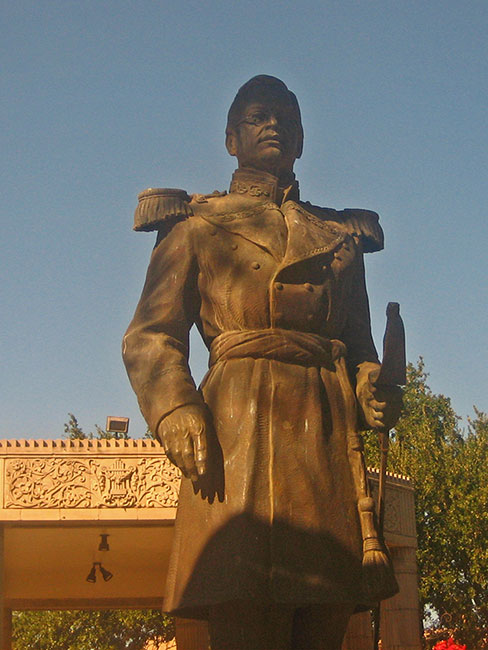
Statue of General Ignacio Zaragoza in San Agustin Plaza in the downtown historic district of Laredo, Texas. Attribution: Billy Hathorn https://en.wikipedia.org/wiki/User:Billy_Hathorn

Statue of General Ignacio Zaragoza in San Agustin Plaza in the downtown historic district of Laredo, Texas. Attribution: Billy Hathorn / wikipedia.org/wiki/User:Billy_Hathorn


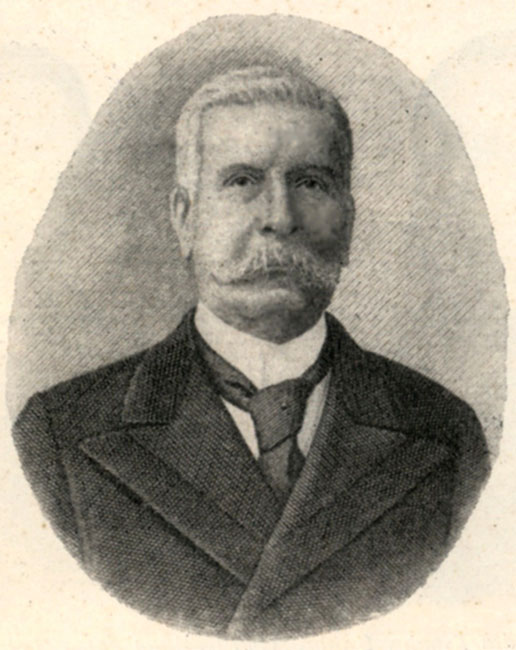
Porfirio Diaz

porfirio-diaz-2Porfirio Diaz (1830-1915) became a war hero during the French invasion of 1861, helping to defeat the invaders at the famous Battle of Puebla on May 5, 1862. He entered politics and followed the rising star of Benito Juarez, although the two men did not get along well personally. In 1876 he grew tired of trying to reach the Presidential palace democratically: he entered Mexico City with an army and not surprisingly won the “election” he set up himself.

Pintura del entonces Presidente de México Porfirio Díaz Mori (1830-1915), exhibida en el museo del Templo y Ex-Convento de Santo Domingo de Guzmán, en la ciudad de Oaxaca de Juárez, Oaxaca, México. commons.wikimedia.org/


Porfirio-Diaz-1867-public-domain

Porfirio Diaz – Circa 1867 – Public Domain image

Porfirio-Diaz-circa-1880-ak-2

Porfirio Diaz – Circa 1880 – Public Domain image